Sean Strub


From Sean Strub’s address for Celebrate Sero: Ten Years of Advocacy
December 6th, 2022
To pinpoint a moment when Sero began is an impossible task. There are many moments when someone was lighting a fuse—setting something in motion—that led to Sero. Some of the ones that most come to mind for me are when Donald Baxter and I were sitting together, he told me about Nick Rhodes‘s case when he was sentenced to 25 years in prison, and that got me upset, and I looked into this further.
When Robert Suttle got out of prison in Louisiana and was doing research to understand what happened to him, he found something I had written and called me on the phone. That was a critical moment. When Vanessa Johnson introduced me to Monique Howell and told me about this amazing woman in South Carolina, who had faced criminalization in the Army. That was a moment.
You know the logistics of creating an organization and the resources that made that possible you know, that really came out of Broadway Cares, with Tom Viola, Henry van Ameringen, and importantly, David Furnish and Anne Aslett when they first saw the film HIV Is Not a Crime and met Robert Suttle and Nick Rhodes, and were still moved by the stories that they wanted to help our effort.
But really, the genesis of Sero goes back far beyond that to when the first people with AIDS met each other and said, “You know what? We need to work together. We’ve got to speak for ourselves. We can’t rely on others, even our friends and allies. We have to be there speaking for ourselves.” And that began a self-empowerment movement, a community empowerment movement that has evolved over the years. But today, it’s a more potent force in policy, change, and development in the epidemic than anything else that’s out there. What we have seen over the last decade, not just with Sero but with the resurgence of the networks: the Positive Women’s Network and Positively Trans, Latinx+, the Reunion Project, and, of course, the U.S. PLHIV Caucus. This is an amazing, powerful network that we have created. We’re changing not just the HIV/AIDS movement, but we’re changing society, and we should be enormously proud of that.
At this point, I felt like an old timer and decided to step back from Sero. I was very proud to turn the reins over to Kamaria Laffrey and Tami Haught to serve as co-executive directors from May 2023. It was so exciting for me to see people living with HIV who stepped into advocacy, even into areas maybe they weren’t experienced in or didn’t know a lot about; but they had a drive and passion from their heart and a commitment and trust in other people with HIV, and have been carried forth, as we all have.
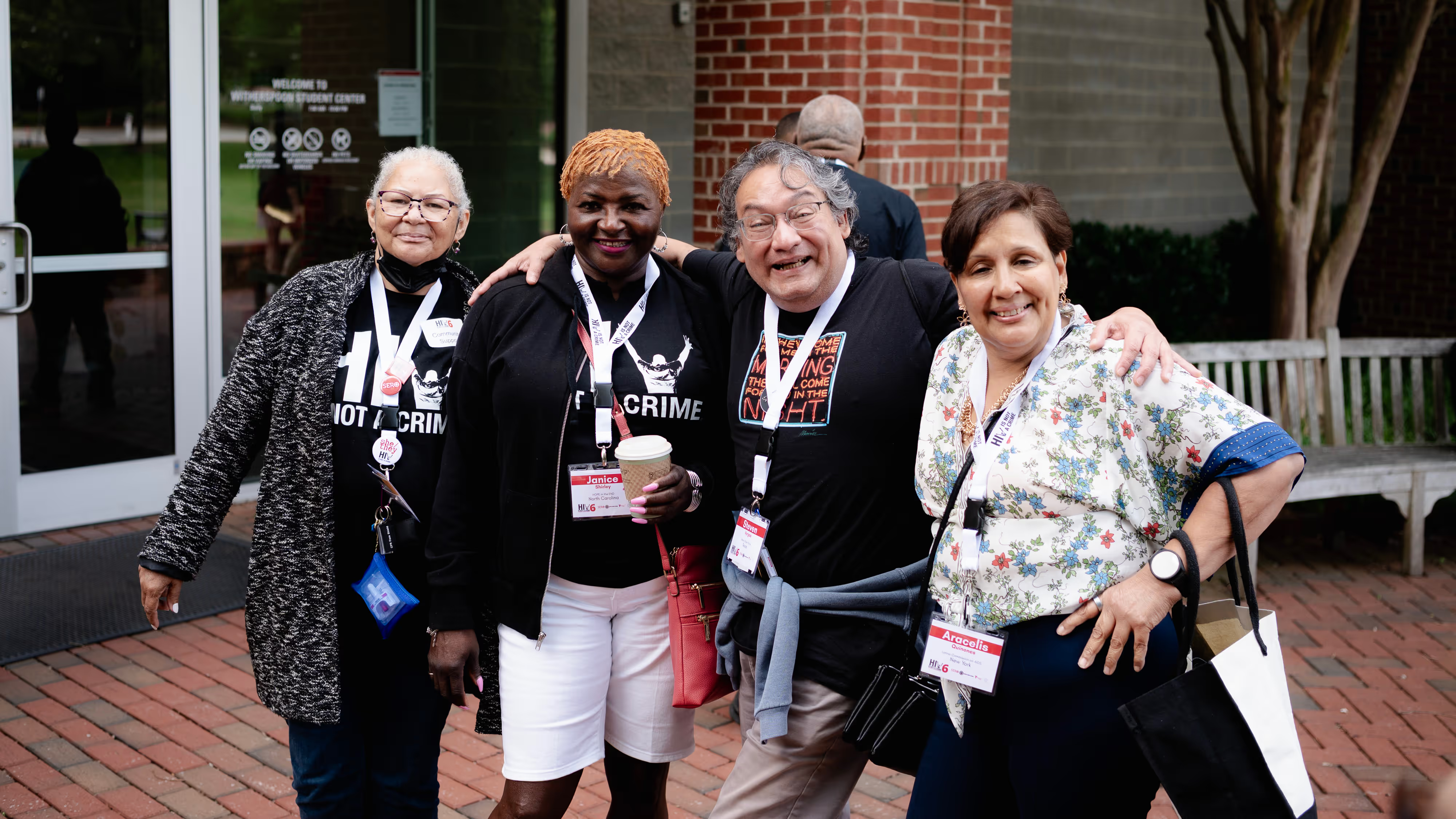
It has been very exciting and very satisfying not only for Kamaria, Tami, and me, but also for everyone who’s ever been to an HIV Is Not A Crime Training Academy. For everyone who has shown up to those demonstrations, who’s written those letters, and who sat on those Zoom calls. I just feel like it’s a wonderful family that I’m so proud to be part of.
Organization note: The Sero Project, Inc. (Sero) was formally founded in 2013 as a 501 (c) (3).
Join the movement for justice
Your support is vital to sustaining Sero's work. Every contribution directly supports our PLHIV-led programs, advocacy, and projects.