Pre-Obituary of Tami Haught
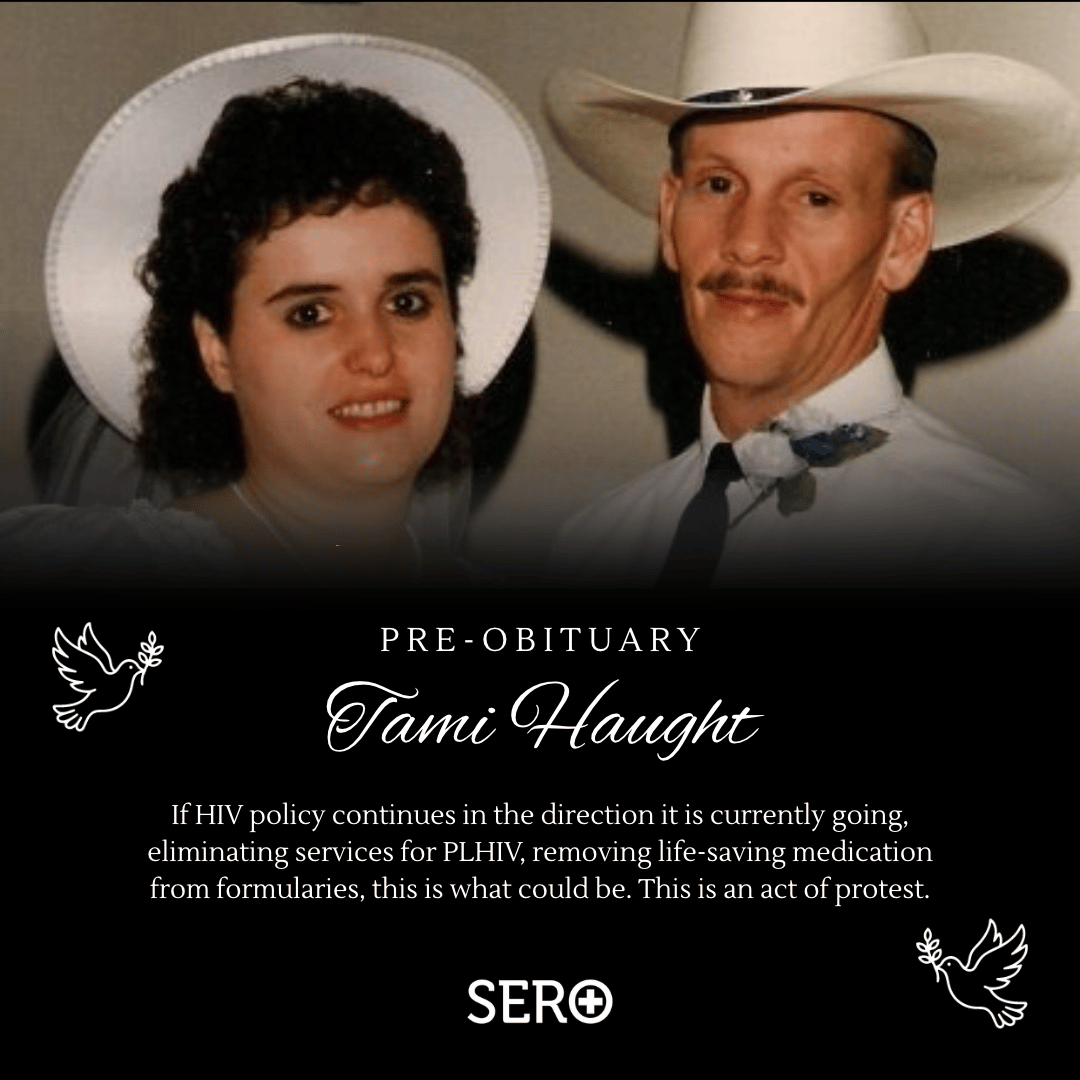
This pre-obituary is written out of anger, frustration, fear, and determination. It is an act of protest. It is not a cry for help. It is not an announcement that Haught is no longer virally suppressed or that HIV is progressing in her body. She is healthy. She is here. And she intends to stay here.
This is a wake-up call. It is asking people to pay attention to what is happening around us and to understand that it is happening on our watch. Systems that were created to keep people healthy and alive are failing. Programs people depend on are being dismantled, underfunded, or made harder to access. Somewhere along the way, empathy has been replaced by politics, bureaucracy, greed, and judgment. We live in one of the richest countries in the world. We spend enormous amounts of money on healthcare, yet too many people still struggle to access the care and medications they need to live. That is unacceptable.
We can do better. We must do better.
And this is bigger than HIV. Healthcare should not depend on where you work, how much money you make, where you live, who you are, or whether you are lucky enough to qualify for the right program at the right time. Access to healthcare should not be a privilege reserved for those fortunate enough to navigate a broken system. Healthcare is a human right. Not just for people living with HIV. For everyone. And it is a right worth fighting for—by everyone—before another person's obituary becomes real simply because we failed to act while we still had the chance.
Tami was given years she never expected, only to face the possibility of having those years taken away by political choices rather than HIV itself.
A Pre-Obituary: Written in Protest
by Tami Haught
Today we honor and recognize a life well lived.
Tamara “Tami” Thompson Haught passed away at age 58—not from complications of HIV, but because of greed, a lack of humanity, stigma, and political decisions that made lifesaving healthcare harder to access.
Haught was diagnosed with HIV on August 23, 1993, the day before her 25th birthday.
She is survived by her loving son, Adrian; daughter-in-law, Jordan Haught; and her three grandsons —the lights of her life. She is also survived by her mother, Evelyn Thompson; sister, Anita Thompson; brother and sister-in-law, Roger and Jennifer Thompson; nieces Whitney, Amber, and Bethann; and their families.
Haught knew how fortunate she was to have a family that accepted and loved her from the moment they learned of her diagnosis. They were her greatest supporters, standing beside her through doctors’ appointments, emergency trips to a hospital 2 1⁄2 hours away, stigma, fear, and uncertainty. Most importantly, they gave her a place where she was always safe and loved.
Haught was preceded in death by her husband, Roger Haught, on October 12, 1996, just two months and nine days before their son was born. Roger died at age 39. Pneumonia and kidney failure were listed on his death certificate as complications of AIDS. But stigma, ignorance, hate, discrimination, and fear of HIV criminalization were underlying causes of his death as well.
Roger struggled with living with AIDS, being a heterosexual man living with a disease that was so stigmatized and hated. But in the end he fought to stay alive long enough to see his son born. He didn't make it.
After her own diagnosis, Haught never expected to live long enough to see Adrian graduate from high school, get married, or have children of his own. Those were dreams she didn't allow herself to believe would come true.
But they did.
Scientific research, new medications, access to treatment, and the determination of a community that refused to allow millions more people to die gave Haught something she once thought HIV had taken from her: a future.
She watched her son grow up. She watched him get married. She held her grandchildren. She got to love them, spoil them, and experience a life she never expected to have.
Haught never expected to live past 40 herself. Every year beyond that felt like time she never thought she would have. She tried to be grateful for every year, every day, and every minute—and to use that time to make a difference. She knew what it meant to believe your future had been taken away, and she refused to waste the future she was fortunate enough to receive.
And then we began going backward.
Access to HIV care and treatment became harder. In Iowa, the embezzlement of $22 million from programs intended to support people living with HIV created fear, uncertainty, and new barriers to care. At the same time, federal cuts to HIV programs threatened medications, prevention, healthcare, housing, and other services people rely on to stay healthy and alive.
After spending the first six years following her diagnosis living in silence and stigma, Haught and her family decided it was time to tell their story. She began educating and advocating because she wanted to make life easier for her son and for every person who would come after her.
She helped lead the successful effort to modernize Iowa's HIV-specific criminal law in 2014. She later joined the Sero Project, working to educate advocates, allies, policymakers, and legislators about the harm HIV criminalization causes people living with HIV and public health.
She spent decades fighting stigma, discrimination, criminalization, and policies that treated people living with HIV as less deserving of dignity, healthcare, and life.
In the end, Haught's death was unnecessary.
The medications existed. The science existed. The knowledge existed. We knew how to keep her healthy. We knew how to keep her alive.
What failed was the political will to make sure she could continue to access them.
Cuts to HIV funding and attacks by the Trump administration on LGBTQIA+ communities, including people living with HIV, made medications and critical services harder to access and placed the lives of Americans living with HIV at risk.
Haught did not survive HIV for more than three decades only to die because politicians decided her healthcare was expendable.
She did not spend decades fighting HIV stigma only to have stigma written into public policy.
And she did not fight so hard to live long enough to see her son grow up and hold her grandsons just to have years of her life taken away because lifesaving healthcare became a political bargaining chip.
A person's access to healthcare and lifesaving treatment should never depend on politics, wealth, geography, identity, or the perceived moral compass of the people holding political power.
We already know what happens when people living with HIV cannot access care.
People die.
We learned that lesson while burying an entire generation.
We should not have to learn it again.